
Solana Trading Bots
kycbit
Axiom Trading Bot Access 2026
Feb 19, 20264 min
Learn how to use Axiom Trade on Solana. Access link, fees, slippage, MEV protection and beginner-safe settings. Updated 2026.
Read B BTC $0.00
+0.00%
B BTC $0.00
+0.00%
 E ETH $0.00
+0.00%
E ETH $0.00
+0.00%
 B BNB $0.00
+0.00%
B BNB $0.00
+0.00%
 X XRP $0.00
+0.00%
X XRP $0.00
+0.00%
 S SOL $0.00
+0.00%
S SOL $0.00
+0.00%
 D DOGE $0.00
+0.00%
D DOGE $0.00
+0.00%
 A ADA $0.00
+0.00%
A ADA $0.00
+0.00%
 S SUI $0.00
+0.00%
S SUI $0.00
+0.00%
 L LINK $0.00
+0.00%
B BTC $0.00
+0.00%
E ETH $0.00
+0.00%
B BNB $0.00
+0.00%
X XRP $0.00
+0.00%
S SOL $0.00
+0.00%
D DOGE $0.00
+0.00%
A ADA $0.00
+0.00%
S SUI $0.00
+0.00%
L LINK $0.00
+0.00%
L LINK $0.00
+0.00%
B BTC $0.00
+0.00%
E ETH $0.00
+0.00%
B BNB $0.00
+0.00%
X XRP $0.00
+0.00%
S SOL $0.00
+0.00%
D DOGE $0.00
+0.00%
A ADA $0.00
+0.00%
S SUI $0.00
+0.00%
L LINK $0.00
+0.00%



Terminal (formerly Padre) is a multi-chain web trading terminal for active traders, focused on fast execution, wallet tracking, and advanced order tools.
Terminal (formerly Padre) is a multi-chain web trading terminal for active traders, focused on fast execution, wallet tracking, and advanced order tools.
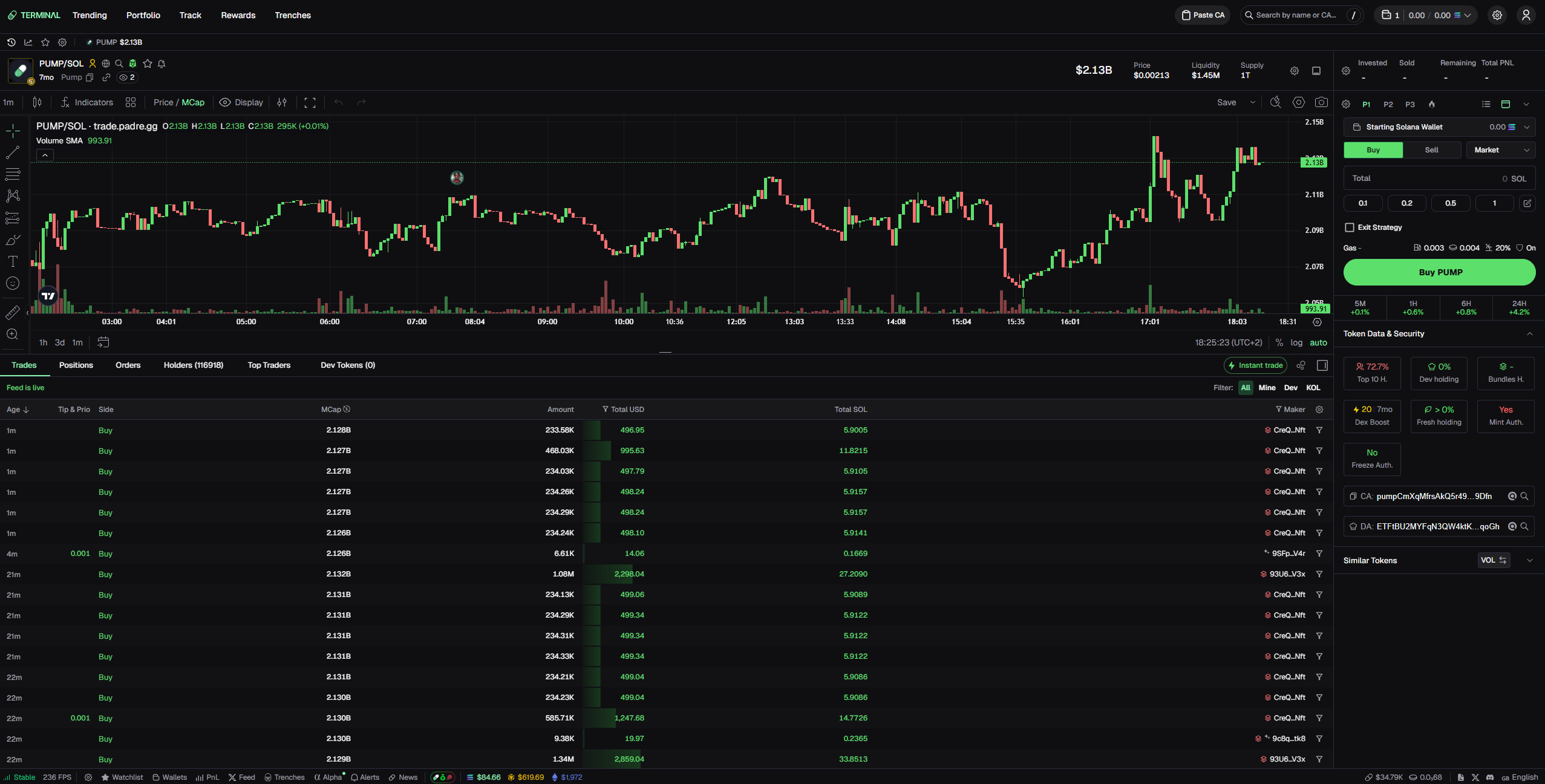
Terminal, previously known as Padre, is a browser-based on-chain trading terminal built for fast, manual trading. It’s aimed at active traders who prefer executing trades themselves in a terminal-style layout instead of using Telegram bots.
It combines token discovery, live market data, and trading tools in one interface. It’s used mainly on Solana, with additional support for Ethereum, Base, and BNB Chain. Available chains and features can vary depending on the section of the app.
Terminal runs as a progressive web app, so it works on both desktop and mobile with an app-like experience.
Best for: experienced traders who value speed and manual control.
Safety baseline: use a dedicated wallet, verify official links, and start with small trade sizes.
Setting up the Terminal Solana Trading Bot is user-friendly, requiring minimal technical expertise:
For maximized benefits, use referral link for enhanced cashback and -35% fees. Many traders leverage this for long-term cost savings.
Trading on Terminal (formerly Padre) involves more than just the obvious fees you see on the screen. Your total cost usually comes down to network fees plus execution-related factors.
Network fees are the standard transaction costs of whatever chain you’re using, such as Solana, Ethereum, or Base. These change depending on network activity.
Trading fees are charged inside the Terminal platform itself. You should check the app for the current rate, as this can change.
Slippage is another cost that’s easy to underestimate. In fast markets or low-liquidity tokens, your order can fill at a worse price than expected.
Failed transactions can also cost you time and fees. These usually happen when slippage is set too low or when the price moves quickly before the transaction confirms.
In most cases, unexpected costs come from your execution settings and market conditions, not from the terminal itself. Start conservative and adjust only after you’ve tested how things fill.
If you’re new to trading on Terminal, keep things simple at first. These basic settings can help reduce failed trades and unnecessary slippage while you learn how execution works.
If your trades are failing often, slightly increase slippage. If your fills are consistently worse than expected, reduce your position size and avoid low-liquidity pairs.
Terminal offers more advanced features like limit orders, exit strategies, wallet tracking, and multi-chain trading. These tools can give you more control, but they also add complexity.
Limit orders and automated exits are useful for planning entries and exits. However, during fast moves or in thin liquidity, they may not execute the way you expect.
Wallet tracking can help you monitor other traders, but copying activity doesn’t guarantee results. Your fills still depend on your own settings, timing, and market conditions.
Multi-chain trading introduces different fee structures, confirmation speeds, and liquidity conditions. Each chain behaves differently, so test one at a time before trading across several networks.
More tools don’t automatically mean better performance. Poor settings, low liquidity, or fast price swings can still lead to bad fills and losses.
A simple rule: start with basic orders, check your execution quality, and only then experiment with advanced tools using small position sizes.
With Pump.fun behind it, the Terminal Solana Trading Bot is likely to keep expanding. That could mean tighter AI-assisted features, better privacy options, and possible rewards connected to the $PUMP ecosystem.
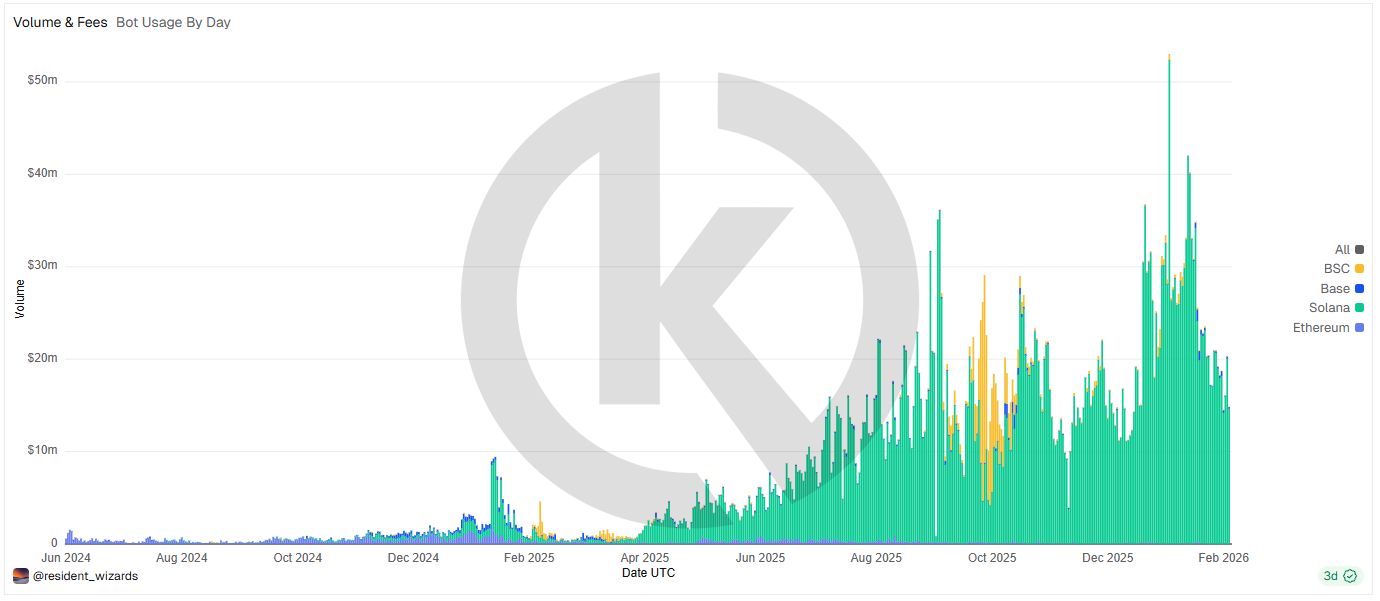
Solana’s onchain activity has grown quickly, with big jumps in trading volume across memecoin sectors. If that trend continues, tools built for speed and direct execution should benefit. Terminal is well positioned to attract experienced traders, and over time it may pull in more retail users who want better execution than basic bots offer.
The Terminal Trading Bot combines Pump.fun’s memecoin reach with Padre’s execution-focused setup. It supports multiple chains, offers incentives, and has been growing steadily among active traders.
It’s not a beginner toy. Markets move fast, liquidity can disappear, and settings matter. Start small, test your execution, and only scale once you’re confident. Used properly, it’s a strong tool for trading fast-moving Solana and multichain markets.
Official links
Disclosure: The website link includes our referral. Checked against official docs: January 27, 2026
Terminal (now branded as Padre) is a multi-chain web trading terminal for active traders. It focuses on fast execution, wallet tracking, and advanced order tools.
No. Terminal is not a Telegram trading bot. It is a browser-based trading terminal that runs on the trade.padre.gg domain.
MEV can affect execution during volatile trading. Some execution controls may reduce risk, but protection is never guaranteed.
Use the wallet or deposit section inside the Terminal to view your address and send funds on the correct network. Start with a small test amount if unsure.
Yes. Terminal allows access to the private key or recovery information for the trading wallet. This should only be done for backup or recovery purposes. Never share your private key and never use your main wallet with any trading terminal.
Terminal is a multi-chain trading terminal. Supported chains can change over time, so always check the terminal itself for the most up-to-date list.
Cashback or fee rebate programs can change over time. If available, details and conditions are always shown inside the app.
Slippage is the difference between your expected price and the actual fill price. Higher slippage increases fill probability but can result in worse execution.